 Robin
Robin
UTM Channel Tracking in One Minute: Stop Only Looking at Direct
7/17/2026 · 2 min read
UTM channel tracking in one minute
In one line: label your traffic
UTM parameters sit in the query string of a URL. Users still land on your site, but Google Analytics 4 can read where they came from, what type of traffic it was, and which campaign drove the click. Without UTMs, paid or shared traffic often collapses into Direct—or the wrong bucket.
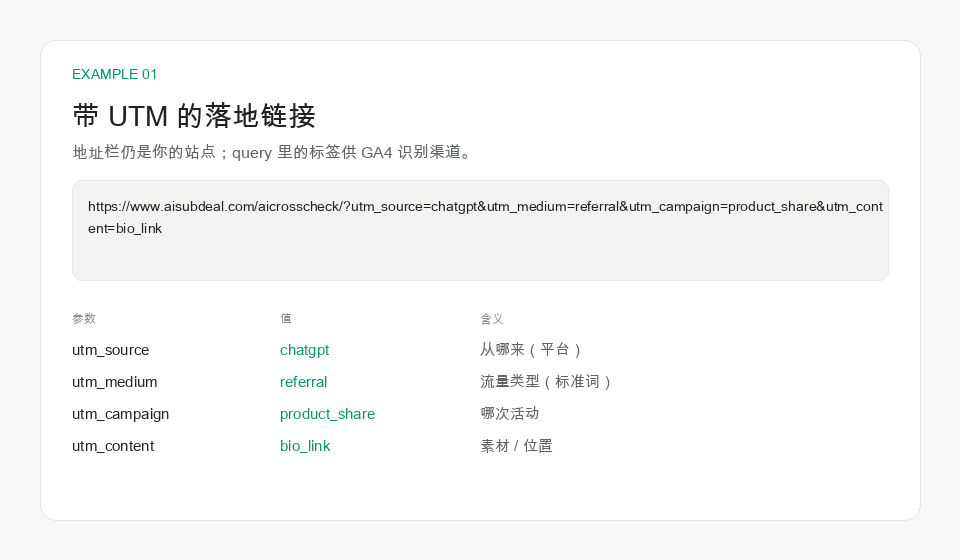
Five fields—only this cheat sheet
| Param | Meaning | Examples |
|---|---|---|
utm_source | Platform / origin | chatgpt, newsletter, xiaohongshu |
utm_medium | Traffic type | Prefer standards: cpc, social, email, referral, affiliate |
utm_campaign | Initiative name | product_launch |
utm_content | Creative / slot (optional) | hero_btn |
utm_term | Keyword (optional) | Paid search |
Avoid free-form mediums like agent or test1. GA4 Default Channel Group will not map them cleanly and often parks them under Unassigned.
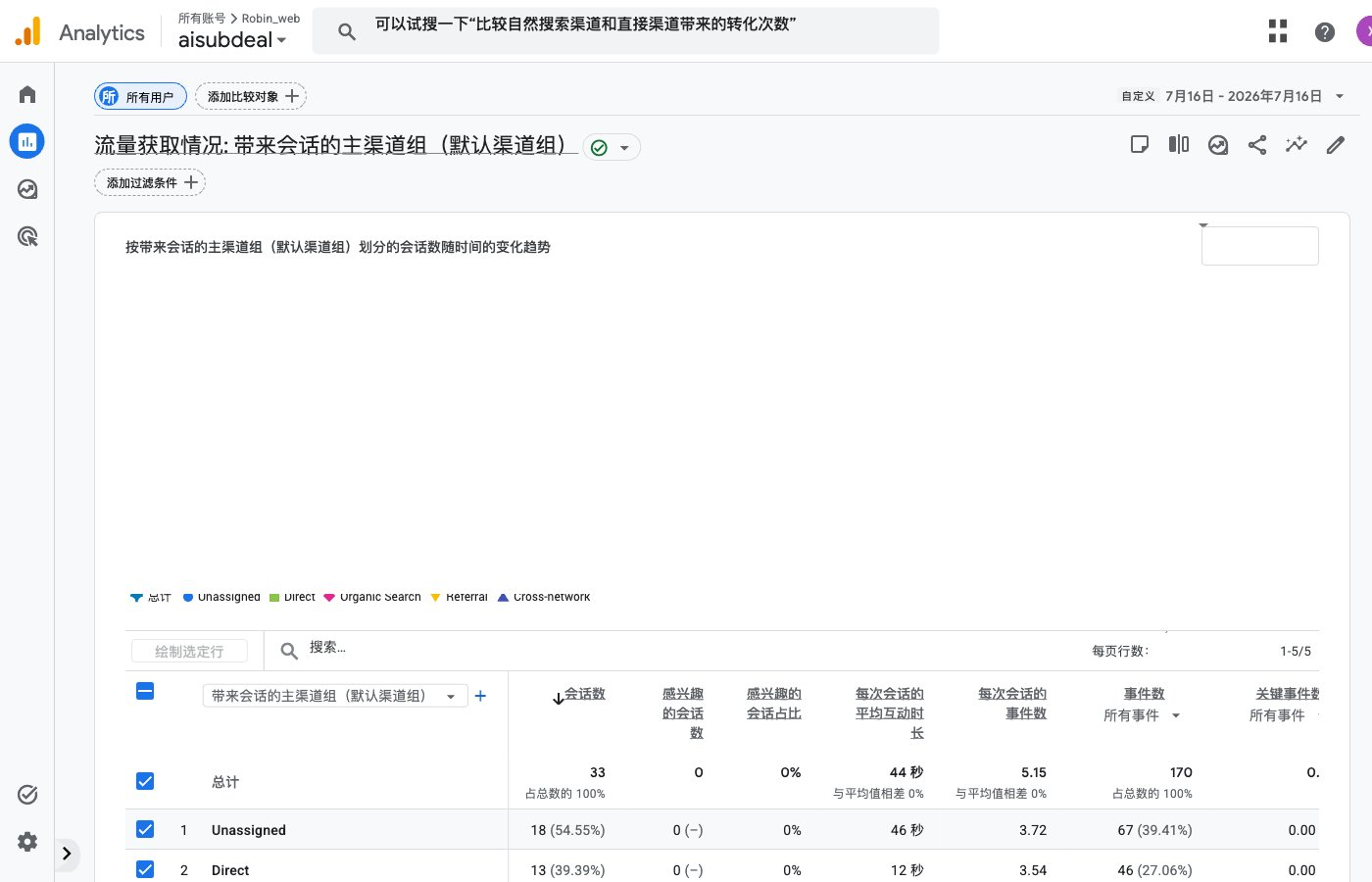
Wrong view: Default Channel Group only
If Unassigned dominates the day, custom-medium UTMs are being buried there—you will not see the concrete source.
Right view: Session source
Open Reports → Acquisition → Traffic acquisition. Primary dimension: Session source (or Session source / medium, Session campaign).
Real screenshot from property aisubdeal on 2026-07-16: test traffic with utm_source=atlas_test is row 6—2 sessions, filterable.
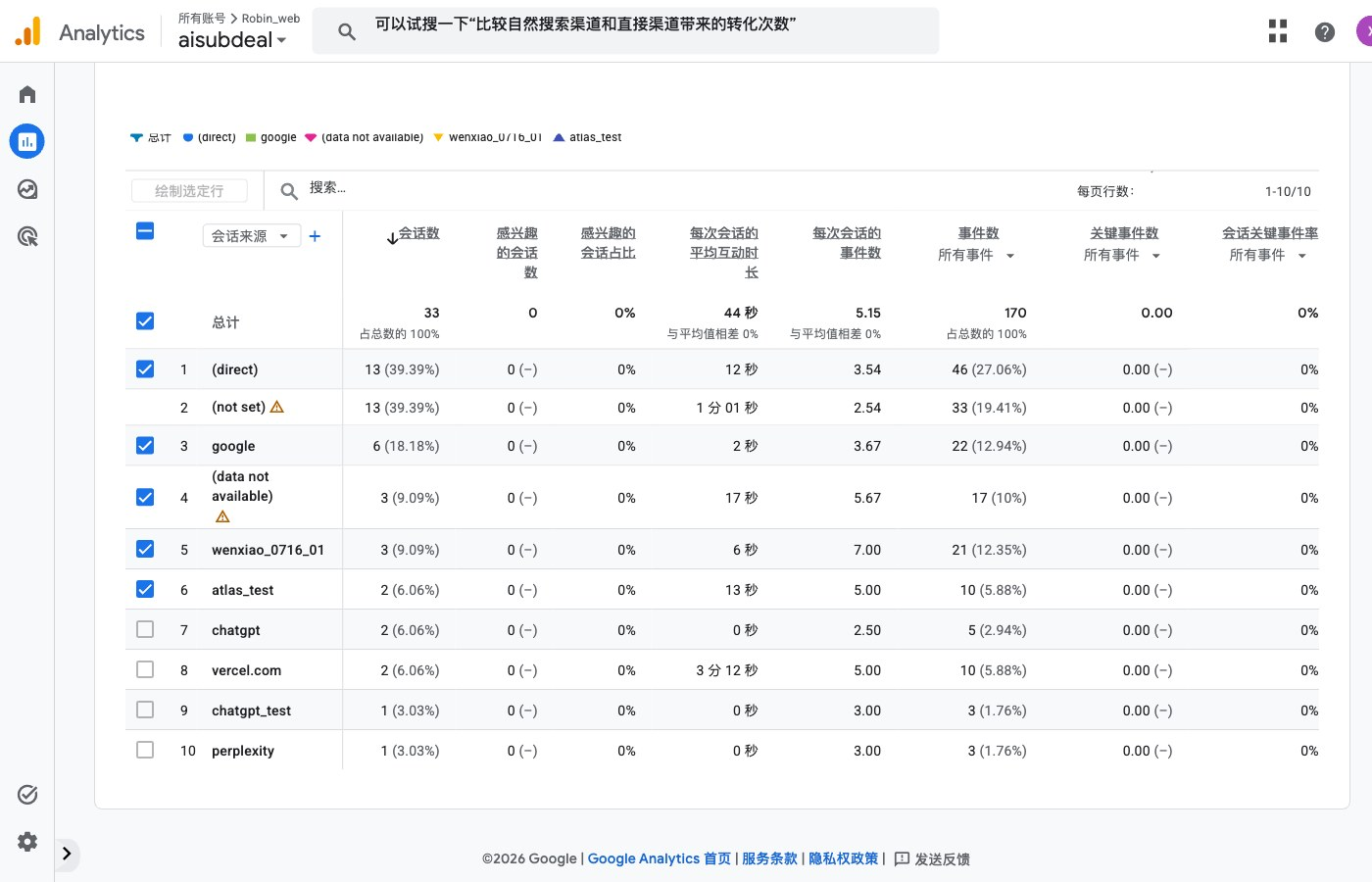
Standard reports often lag by hours or a day. Realtime “first user source” cards frequently show Direct for sample users—that is not a reliable UTM-fail signal.
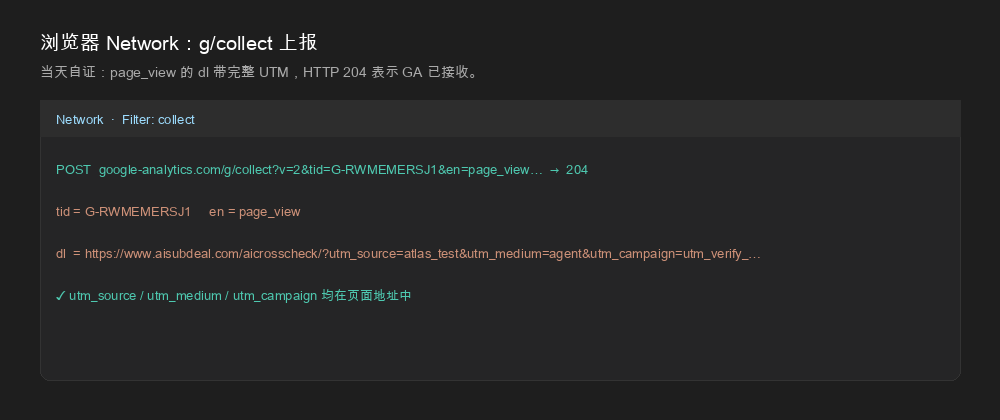
Same-day proof: Network collect
In DevTools → Network, filter collect. Confirm g/collect includes the full URL with utm_* in dl and returns 204.
Three operating rules
- Keep the query string on the landing URL—redirects, auth, and short links must not strip UTMs
- Name stably—lowercase, underscores; use standard mediums
- Test one link before a campaign—click it; the next day search that source under Session source
UTM is not magic: label traffic correctly, read the right dimension, and channel accounting becomes boring—in a good way.